A robot in a luxury store has one job to prove: it makes the visit better without making the store feel like a warehouse. The useful changes could happen behind the scenes, where machines check stock, move items, and help staff spend more time with shoppers.
Quick read
- Stock checks could happen more often, with fewer manual trips to storage.
- A robot concierge may answer routine questions, while staff handle private buying decisions.
- The open issue is cost: a machine must improve service enough to earn its floor space.
Where robots could help first
Inventory is the clearest starting point. A mobile robot could scan shelves, count products, and compare what it sees with a store’s inventory system. That work matters in luxury retail because a missing size, color, or model can end a sale before a staff member gets a chance to help.
The robot would need more than cameras. It would need safe movement around people, accurate item recognition, and a way to flag uncertain results for a staff member. A box placed in the wrong location could look like an empty shelf unless the system checks the wider stock area.
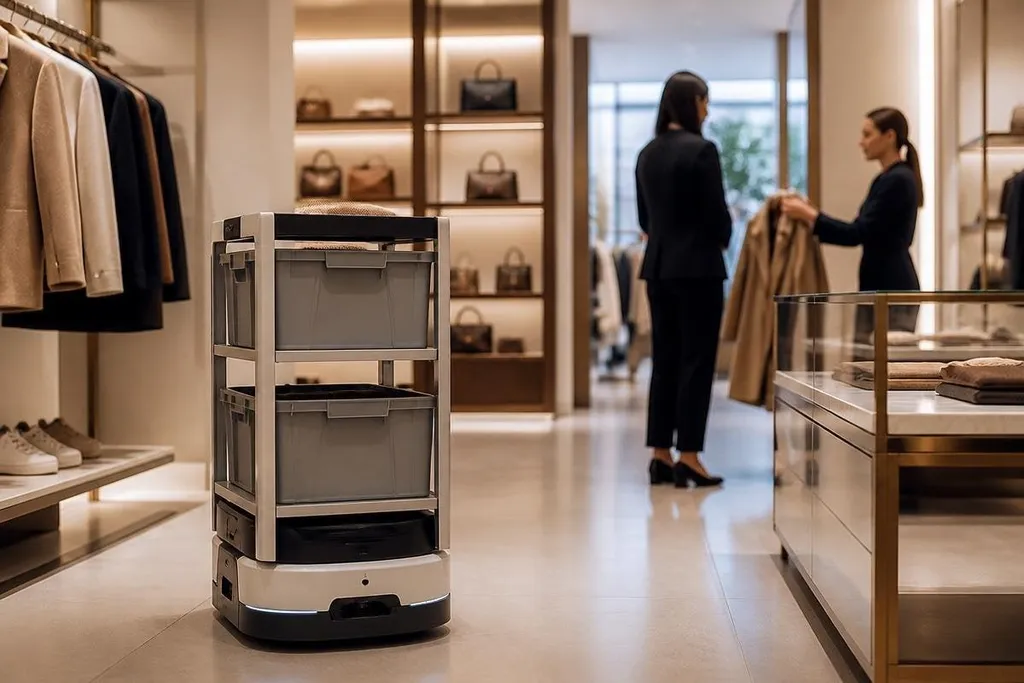
Back-room movement is another practical task. A robot could carry items between storage, fitting rooms, service desks, and sales areas. Staff would still make the decisions, but they could spend less time walking through doors and lifts with a single product in hand.
That use case has a limit. Luxury stores often have narrow layouts, changing displays, and customers who expect quiet service. A machine that blocks a doorway or makes people wait has created a new problem.
The customer-facing role
A robot could greet visitors, answer product-location questions, or guide someone to a department. It might also show a product video or call a staff member when a visitor asks for detailed help.
Routine answers are a sensible place to start. Questions about opening hours, collection points, care instructions, or available departments follow clear patterns. A staff member can then focus on fit, taste, price, and the private parts of a purchase.
The machine should hand over at the right moment. A shopper looking at a high-value item may want context from a person, not a screen with a voice. The handoff needs to feel quick and quiet, with no repeated explanation.
This is where the luxury setting changes the design brief. The robot’s size, sound, speed, and appearance all affect the visit. A small mobile base may suit a busy floor better than a humanoid form, even if the humanoid attracts more attention in a product video.
What remains unproven
No price, store count, or measured sales result is supplied for a specific retail robot here. That means the business case stays open. A machine may reduce routine work, but the store still has to pay for hardware, software, charging, repairs, staff training, and floor space.
Privacy also needs a clear rule. Cameras and microphones can collect more information than a store needs for stock work or basic assistance. Retail teams should define what the robot records, how long it keeps that data, and who can see it before the machine meets customers.
Luxury retailers need proof that a robot can work through a full shift, not only greet visitors during a launch event. A Robot24 report can name the store task, robot, trial length, and staff support, so you can judge whether the machine helps customers or adds another job behind the scenes. That evidence leads to the back room, where stock checks and item movement are easier to measure.
I’d be cautious about putting a robot at the center of the luxury experience before the back-room tasks work well. Stock checks and item movement have clear measures: count accuracy, trips avoided, response time, and repair hours.
A buying checklist for retailers
Before a store trials a robot, the team should:
- Name one task: Pick a job with a clear start, finish, and result.
- Set a human handoff: Decide when staff take over and what information they receive.
- Measure the floor cost: Count blocked paths, charging space, noise, and cleaning work.
- Check data use: Record what sensors collect, where it is stored, and when it is deleted.
- Test ordinary days: Include busy periods, display changes, deliveries, and visitors who stop unexpectedly.
- Price the full service: Add software, maintenance, training, and replacement parts to the machine cost.
A pilot should run long enough to expose routine faults, not only the best moment of a launch event. If the robot needs a staff member beside it all day, the store has bought another task rather than removing one.
Luxury retail may gain from quieter automation that helps people find, move, and manage products. The next useful result is a measured store trial showing whether that work cuts delays without taking attention away from the customer.